Notion's Community-Led Growth: A Blueprint for Success
Community-led growth is the newest growth strategy for improving customer retention and scaling your business. Community development is quickly becoming central to business growth, and companies are realizing they need to invest in community operations early on.
By putting community at the center of your flywheel, you're ensuring the foundation of your business is collaborative.
Notion offers a compelling case study in community-led growth. Their approach—fostering and facilitating organic projects within their communities—has paid off with a thriving community structure that keeps members passionately engaged.
How Notion's Community Got Started
.webp)
Notion has a unique community story. Users loved the product so much that they began talking about Notion in other online community spaces unprompted—from Facebook groups to entire YouTube channels dedicated to the company.
Instead of fighting this organic growth, Notion let users dictate how communities should operate. The team works closely with community members, providing projects and tools to ensure belonging and thriving engagement.
It's an experiment that's gone well. Notion proves that if you build a good product, your users might drive a large portion of your marketing efforts.
What Is Community-Led Growth?
Community-led growth is a play on "product-led growth"—a typical go-to-market strategy. But instead of using the product alone to retain and acquire users, the product is seamlessly intertwined with community.
For community-led growth to succeed, companies need to turn customers into their best advocates—or as Notion calls them, superfans. It takes word-of-mouth marketing and amplifies it: instead of customers talking up your company at the local coffee shop, they're gathering in online spaces with peers.
It's an organic way to bring awareness to your products, and your job is to support and guide these superfans.
Notion's Community Strategy
Notion noticed several users creating their own communities on different social media platforms. Instead of fighting this decentralization, Notion capitalized on the trends organically taking place.
Over time, they identified two main business goals for their community:1. Drive more users to their product2. Foster user education
Every community project has derived from within the community itself—Notion builds on top of what users create.
Community Tools Utilized by Notion
Template Gallery
Early on, Notion noticed users creating templates for the online workspace and sharing them with peers. Notion identified this collaborative trend and offered support by creating a template gallery on their Community Page.
This encourages users to share creative information with one another while making it easy for new users to get started.
Events
Notion noticed users eager to organize both in-person and online events. The company showed support by providing funding for user-organized events.
Interestingly, Notion tried organizing their own events but pivoted away. Events organized by the community felt more authentic and powerful than company-run events.
Community-Organized Groups
Instead of enforcing a centralized hub, Notion embraced the bottom-up approach. They encourage users to host communities wherever they desire.
The result: dozens of different community groups all over the world in 50+ languages. There are groups on Facebook, Reddit, Twitter, LinkedIn, Slack, Discord, Clubhouse, and other platforms.
Each community is moderated by fellow community members from the ambassador program. Notion shares Principles of Community along with a strong code of conduct. They don't own these groups—they lecture best practices, offer recommendations, and dedicate support teams to moderators.
Notion advertises a list of each community group on their Community Page for easy access.
Ambassador Program
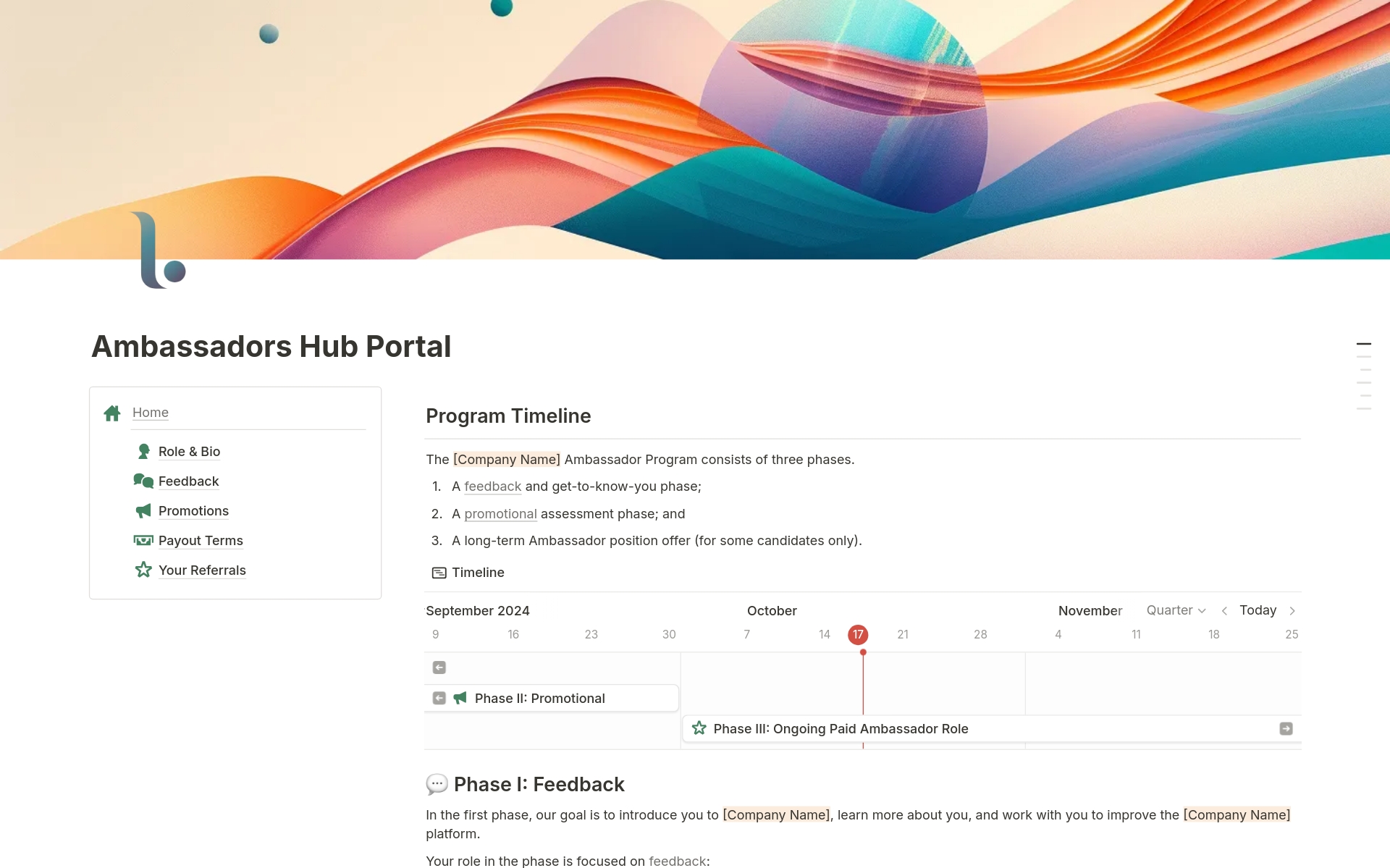
Notion founded an ambassador program to harness the power of superfans. Ambassadors monitor online community groups, YouTube channels, and events. Notion guides them on best practices, and ambassadors must abide by a strong code of conduct.
Ambassador benefits include:- Perks and appreciation- Strong relationship with Notion team- Open communication and feedback in real-time- Early access to product updates and new features- Regular events with other ambassadors and Notion team members
There's a long waitlist to join. Notion waits until superfans prove themselves as leaders within online communities before acceptance.
Certification Program
Notion identified members looking to monetize their Notion knowledge. In response, they created a Certification Program to assist users with becoming experts.
Users can become officially certified and work as consultants. Companies hire these consultants to onboard onto Notion and teach everything about the product. Some members make their entire living as Notion consultants.
Once again, this idea was driven by the community—Notion found ways to build on top of it.
Block-by-Block Conferences
Notion created an annual virtual conference to bring the community together. It features interactive workshops to provide users with higher-level knowledge.
Champions Community
For users on enterprise plans, Notion created a champions community. These champions lead their workplace and support team members. The group swaps information and tutorials, learns from each other, and finds inspiration.
Influencer Program
Finding some influencers creating entire YouTube channels devoted to Notion, they set up a sponsorship plan.
For influencers unfamiliar with Notion, they reach out and offer free plans to initiate excitement. There's been a successful network effect—influencers watch other influencers' content, making it easier to attract more talent.
Key Lessons from Notion's Strategy
Dedicate a Team to Community Building
It's rare and difficult for small companies to hire community managers. But it's important—consider outsourcing to fill community roles.
Look for superfans already existing in your online space. Passion for your company makes for ideal community hires.
Have Different Goals Per Project
Notion measures each project differently with different goals. The template gallery and ambassador program are measured completely differently, but both feed into company growth.
Embrace the Voice of the Customer
The bottom-up approach contributes to success. By embracing customer voice, Notion created a model where users see themselves as members, not just customers.
By capitalizing on customer behaviors and trends, Notion created a virtuous circle feeding into every aspect of growth. Every community project derives from within the community—Notion's role is to foster ideas and bring visibility to them.
Applying These Lessons to Your Business
You don't need Notion's scale to apply community-led growth principles:
Start by listening. Where are your customers already talking about your product? What are they saying?
Support organic activity. Instead of trying to control the conversation, amplify what's working.
Create programs that formalize engagement. Ambassador programs, certification, and champion communities give structure to enthusiastic users.
Let community drive product. User feedback and ideas should influence your roadmap.
Measure differently for different programs. Each community initiative may have unique success metrics.
Community platforms designed for B2B SaaS—like Bettermode—provide the tools to implement community-led growth: spaces for different community programs, integration with your product, recognition systems for ambassadors, and analytics to measure impact.
Ready to activate community-led growth? Book a demo with Bettermode.
FAQs
What if we don't have organic community activity to build on?
Start by creating value first. Share educational content, host events, and engage where your customers already are. As you provide value, community activity will follow. Not every company will have Notion's organic growth—but the principles of supporting and amplifying customer engagement still apply.
How do we manage decentralized communities across multiple platforms?
You don't need to control every conversation. Focus on providing resources, guidelines, and support. Create a central hub (like Notion's Community Page) that connects to distributed communities. Train ambassadors to maintain quality across platforms.
When should we start investing in community?
Earlier than you think. Even small teams can start community building by engaging with customers, creating educational content, and nurturing superfans. As you grow, formalize programs like ambassador networks and certification.
How do we measure community-led growth ROI?
Track metrics like: new user acquisition from community referrals, user retention rates for community members vs. non-members, support ticket deflection through community resources, and product adoption influenced by community education. Each program may need different measurements.