20 Community Space Ideas for B2B SaaS Customer Communities

In school, did you have a group of friends who were closer to you than other classmates? The same goes for online communities. There's a diverse set of members who share a common connection, but certain cohorts share specific passions. It's natural for them to form groups for focused, deeper discussions.
Beyond member groups, you'll want to create sections in your community to host specific types of content or resources. For simplicity, let's call these member groups and content sections "spaces."
The right structure helps members find what they need, connect with relevant peers, and engage more deeply. Here are 20 popular types of spaces used in online communities—particularly for B2B SaaS companies building customer communities.
Member Segmentation Spaces
1. Location-Based Spaces
Building digital groups based on physical proximity can strengthen relationships. If your product has different implications based on location—like a payroll solution where customers configure based on local laws—location-based groups make sense.

These groups also give rise to real-life interactions through events and meetups, expanding and strengthening your community through an omnichannel approach.
2. Industry or Domain-Based Spaces
Bring members from the same industry closer together. If your company serves clients from different domains, they'll want to discuss their industry and how to best apply your solutions to their challenges.
Common examples include e-commerce/retail, software/technology, healthcare, real estate, hospitality, and finance.
3. Role-Based Spaces
For B2B products used by different roles within organizations, create spaces where similar roles can connect. A marketing automation platform might have separate spaces for marketing managers, demand gen specialists, and marketing operations.
Members in similar roles face similar challenges and can share relevant solutions.
4. Company Size or Tier Spaces
If you serve companies of different sizes or have tiered pricing, create spaces for each segment. Enterprise customers have different needs than startups. Giving them dedicated spaces ensures discussions remain relevant.
Engagement and Recognition Spaces
5. Superuser Space
Identify the superusers in your community—they'll gradually become evangelists who spread the word. Create an invite-only private group for super customers since they have strong affinity for your brand.
This exclusivity helps you listen to suggestions closely and gives your best customers a reason to stay engaged.
6. New Member Space
Create a space where new members can seek help, offer help, and learn about the community. Highlight key resources so members have everything they need to get started.
This dedicated onboarding space helps new members feel welcome and reduces the friction of joining.
7. Spotlight Space
When community members improve your community with quality contributions, appreciate their effort publicly. Create a spotlight space and feature members on a quarterly, monthly, or bi-weekly basis.
Interview them about their work, their use of your product, and their advice for others. This recognition motivates continued contribution.
8. Celebration Space
What's a community that doesn't celebrate? Create a space to celebrate milestones—reaching a certain number of customers, raising funding, company anniversaries, or product launches.
These moments build shared identity and make members feel part of something bigger.
Product and Support Spaces
9. Customer Support Space
Community members will inevitably seek help—about using your product or the community itself. Create a dedicated space so members know where to post requests for help.
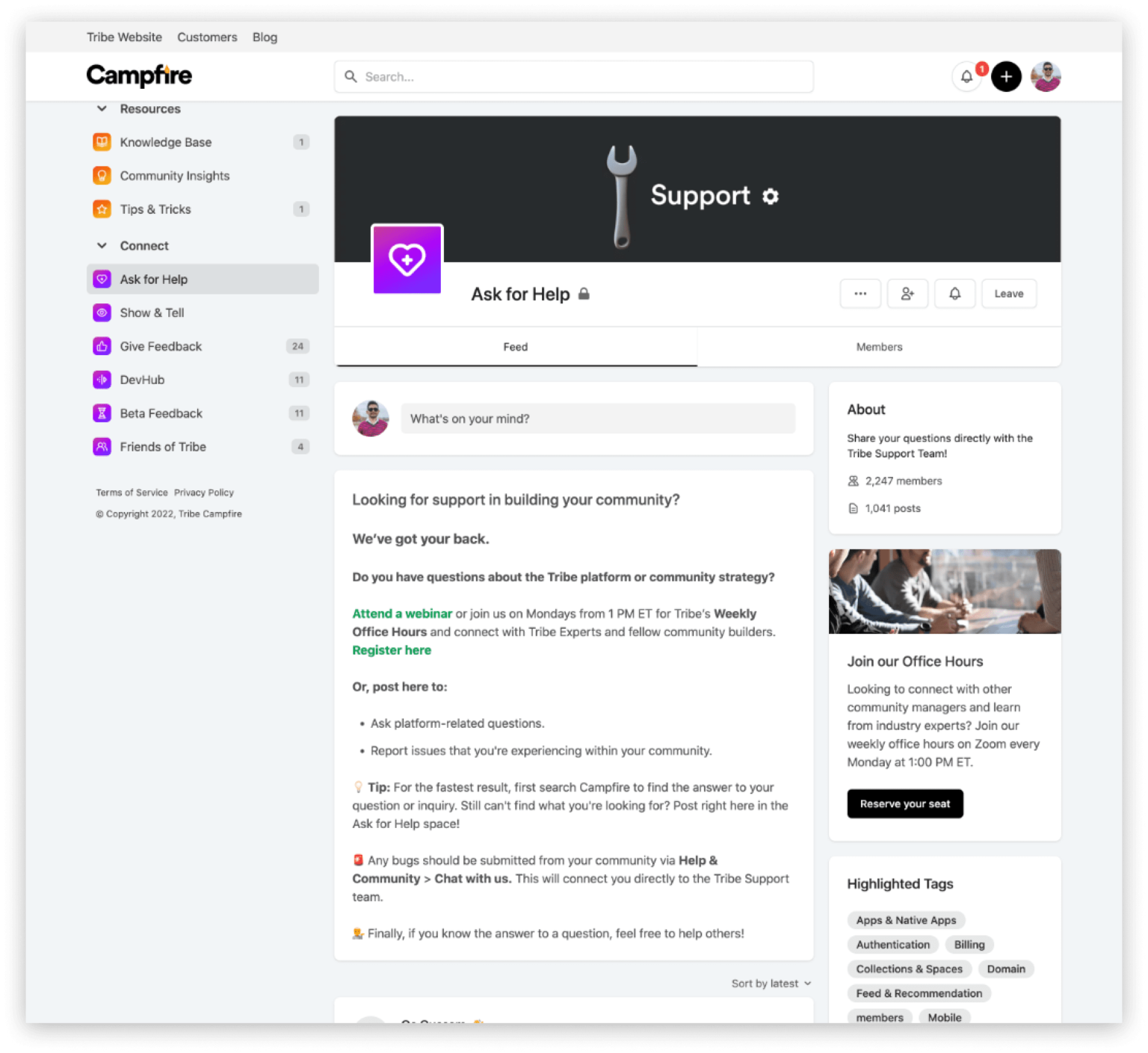
Consider integration with your help desk software to directly escalate and create support tickets. Your support team gets full context around issues.
10. Beta Tester Space
For software companies, create a space where customers can opt in to test features in beta and provide feedback. Keep this space specifically for collecting feedback and gathering feature requests.
Members work closely with your research team, designers, and product managers. They stay invested in your solution since they contribute to the product's direction.
11. Ideas and Feedback Space
Dedicate a space to collecting ideas and feedback on how your community, products, and services can improve. Let members submit ideas, vote on others' suggestions, and discuss potential solutions.

This structured approach to feedback helps product teams prioritize what matters most to customers.
12. Release Notes Space
Communicate new features, improvements, and bug fixes. This improves product knowledge and boosts adoption, resulting in better engagement and retention.
When members see the product evolving based on feedback, they feel heard and valued.
Knowledge and Resource Spaces
13. Knowledge Base Space
Showcase knowledge base articles created by your team. Configure this space so only your team can create content, but allow members to post comments and feedback to improve the documentation.
This brings together static and dynamic content in one community.
14. Tips and Tricks Space
Your product likely has elements that only power users and internal teams know—keyboard shortcuts, advanced configurations, creative use cases. This space shares that tribal knowledge.
User-contributed tips often reveal valuable insights your documentation team never considered.
15. Resources Space
Share valuable resources with your customers—articles, templates, books, white papers you've created or found on authority sites. Curate the best content to help customers succeed.
16. News Space
Keep members updated with domain news. If you're in the finance domain, share the latest rules, regulations, and changes. Position your community as the place to stay informed.
Communication Spaces
17. Announcements Space
Share company updates—special initiatives, scheduled maintenance, new hires, policy changes. Members stay informed about what's happening at your company.
Keep this space one-way (only admins post) to ensure important announcements don't get buried in discussion.
18. Behind the Scenes Space
Share exclusive content and connect your internal team (including leadership) with members in a personal way. Members get an inside look into day-to-day life at your company.
This humanizes your brand and builds emotional connection.
19. AMA Space

Conduct Ask Me Anything sessions by inviting industry experts and leadership teams. Collect all AMAs in one space so members can reference past sessions.
AMAs create high-value content while giving members direct access to expertise.
20. General Discussion Space
A place for posts and discussions that don't fit other spaces. Members aren't barred from posting content that doesn't fall into pre-defined categories.
As a community manager, monitor this space for spam and consider moving valuable discussions to more appropriate spaces.
Structuring Your Community
The spaces you create should reflect your community's goals and your members' needs. Not every community needs all 20 types—start with the essentials and add spaces as your community grows and member needs become clearer.
For B2B SaaS communities, the most essential spaces typically include support, feedback/ideation, knowledge base, announcements, and a general discussion area. Add segmentation spaces (by industry, role, or tier) once you have enough members to sustain activity in each.
Community platforms designed for B2B SaaS—like Bettermode—provide templates and tools to create these space types without custom development. You can set permissions (who can post vs. comment), configure content types (Q&A, articles, discussions), and customize the look to match your brand.
Ready to structure your community? Talk to sales for a demo.
FAQs
How many spaces should a community have?
Start with 5-7 core spaces and add more as your community grows. Too many spaces with little activity can make your community feel empty. Better to have fewer active spaces than many quiet ones.
Should spaces be public or private?
Most spaces should be public to community members. Use private spaces strategically—for beta testers, superusers, or specific customer tiers. Private spaces add exclusivity but reduce discoverability.
How do we decide which spaces to create?
Start with your community's primary purpose. Support community? Prioritize support and knowledge base spaces. Feedback community? Prioritize ideation and product spaces. Add member segmentation spaces once you understand how your members naturally cluster.
What if a space isn't getting activity?
Either the space isn't meeting a real need, or members don't know it exists. Try seeding content, highlighting the space in onboarding, or merging it with a related space. Sometimes removing underused spaces improves overall community health.