Communities of Practice: Driving Knowledge Sharing and Customer Success in B2B SaaS

Growth doesn't happen in a vacuum. It happens inside a community.
That's why many B2B SaaS organizations create communities of practice—collaborative networks that drive knowledge sharing, improve customer outcomes, and reduce support costs. Whether you're building an internal community for your team or a customer community to drive product adoption, understanding how communities of practice work will help you build one that delivers real results.
What Is a Community of Practice?
A community of practice is a group of individuals with shared interests or professions who come together for collective learning, knowledge sharing, and networking.
The term was developed by cognitive anthropologists Jean Lave and Etienne Wenger, highlighting the social and experiential aspects of learning. Members interact regularly, discussing challenges, sharing insights, and learning from each other's experiences.
For B2B SaaS companies, communities of practice typically take two forms.
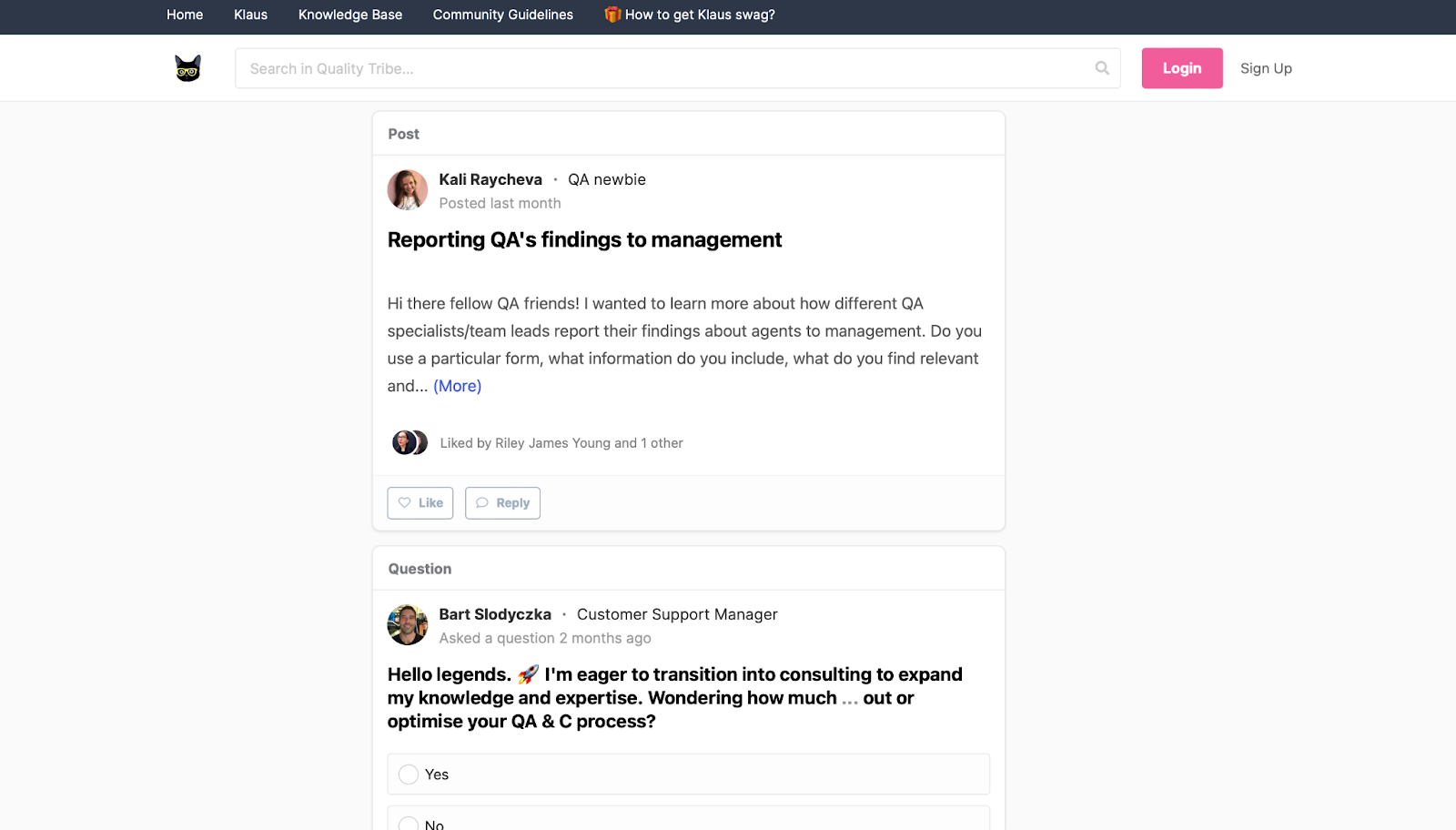
Customer communities bring users together to help each other solve problems, share best practices, and drive product adoption. The result is reduced support tickets, faster time-to-value, and improved retention.
Internal communities connect employees across teams to share knowledge, accelerating onboarding and preserving institutional expertise that would otherwise walk out the door when people leave.
Consider a group of customer success managers at a B2B SaaS company. By forming a community of practice, they exchange strategies from customer interactions, share effective renewal tactics, and learn collectively. This enhances individual skills while contributing to knowledge management across the organization.
The Three Pillars of a Community of Practice
At the heart of every community of practice are three foundational elements.
The Domain: Shared Interest
The domain is what brings people together—the shared area of interest or expertise that defines the community's focus.
For B2B SaaS, this could be a specific product or platform (your customer community), a professional function like customer success or product management, or an industry vertical like fintech or healthcare technology.
The domain gives members common ground. Without a clear domain, a community lacks purpose and direction.
The Community: Relationships and Interactions
The community is the group of individuals who engage in discussions, share information, help each other, and learn together.
In B2B SaaS customer communities, this includes power users who've mastered the product, champions who advocate for it, and practitioners at various skill levels who are still learning. The diversity of experience levels is actually valuable—newcomers ask questions that surface important information, while experts provide answers that benefit everyone.
Relationships matter here. A community of practice isn't just a collection of individuals—it's a network of connections where people know and trust each other.
The Practice: Shared Body of Knowledge
The practice is the shared body of knowledge, resources, and approaches that members develop together over time.
For a B2B SaaS customer community, this might include best practices for implementation, workflow templates and configurations, integration guides, troubleshooting documentation, and use case examples. The practice represents the accumulated wisdom of the community.
This knowledge isn't static. It evolves as members encounter new challenges, discover new solutions, and share what they've learned.
Types of Communities of Practice for B2B SaaS
Customer Communities of Practice
Customer communities bring together users of your product who share knowledge, solve problems together, and help each other succeed.
The purpose is reducing support burden, improving product adoption, increasing retention, and creating advocates who drive growth. When customers help each other, everyone benefits—support scales without proportional cost increase, customers find solutions faster, and the community becomes a reason to stay with your product.
Consider a project management SaaS that creates a customer community where users share workflow templates, discuss implementation strategies, and help each other troubleshoot. The community might deflect half of support tickets while simultaneously improving customer satisfaction because members get answers faster from peers who've faced the same challenges.
Internal Employee Communities of Practice
Internal communities connect employees who can learn from each other by sharing knowledge and experiences across teams and departments.
The purpose is accelerating onboarding, preserving institutional knowledge, improving cross-functional collaboration, and scaling expertise. When a new hire can tap into a community of experienced colleagues, they ramp faster. When departing employees have contributed their knowledge to the community, less leaves with them.
Consider a B2B SaaS company that creates an internal community of practice for customer success managers to share renewal strategies, escalation patterns, and customer health indicators. Team performance improves and ramp time decreases because new CSMs can learn from the collective experience of the entire team.
Professional Communities of Practice
Professional communities bring together individuals who work in the same function or profession, often spanning multiple companies.
The purpose is fostering professional development, sharing industry knowledge, and improving standards within the profession. For the company hosting the community, there's also brand awareness and thought leadership value.
Consider a customer success platform that creates a community for CS professionals across the industry. Members share best practices, discuss emerging trends, and help each other grow professionally. The platform builds awareness and credibility by serving this professional community.
Benefits of Communities of Practice
For Customer Communities
Peer-to-peer support in customer communities can reduce support tickets by 40-60%. When customers answer each other's questions, your support team can focus on complex issues that truly require expert help.
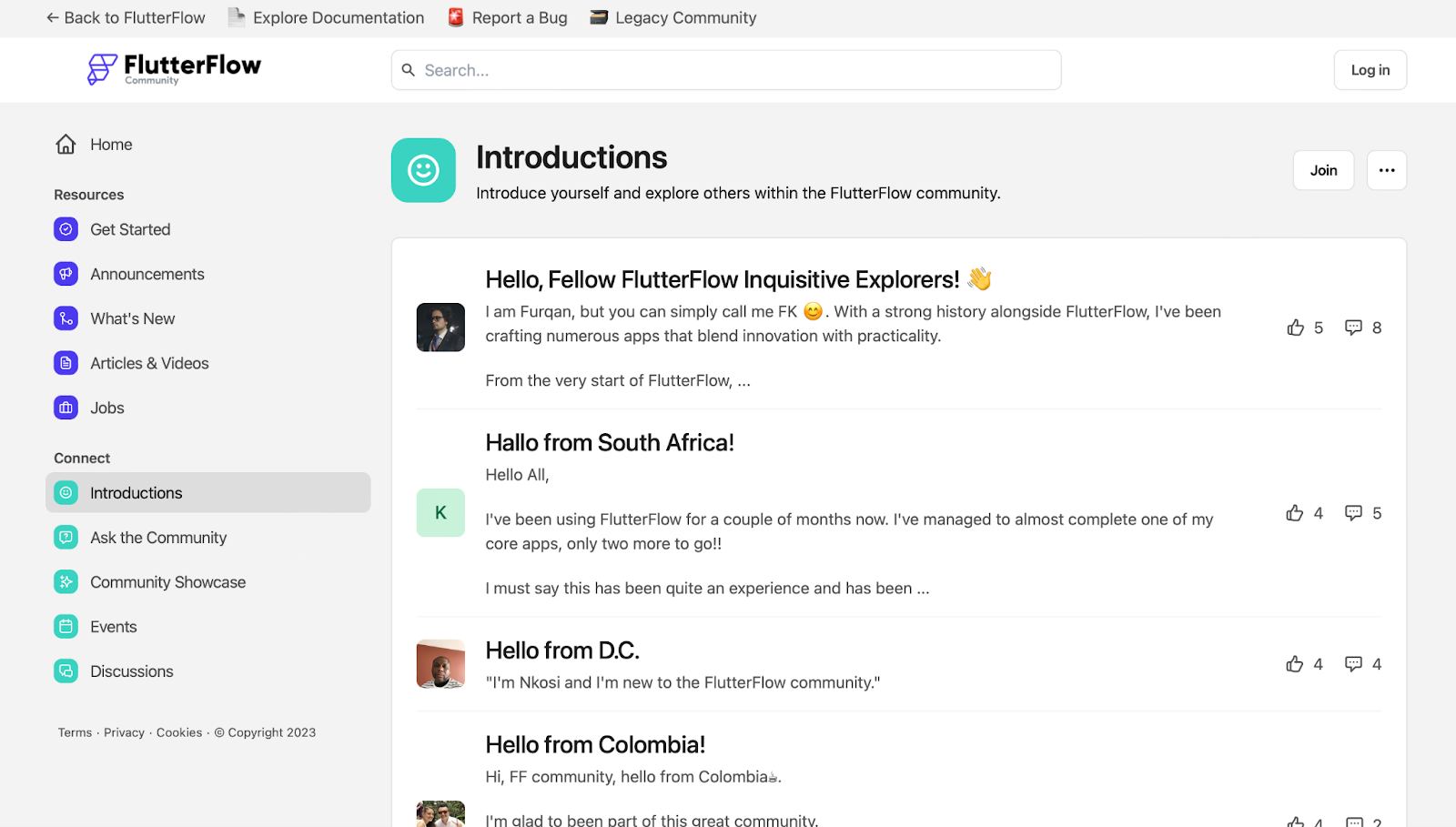
Knowledge sharing accelerates time-to-value for new customers. Instead of waiting for support responses or searching documentation, new users can learn from experienced users who've already solved the problems they're facing.
Product feedback flows naturally in customer communities. You see the challenges customers face and the solutions they're creating—direct input for roadmap prioritization.
Customer advocacy grows as engaged community members become champions who refer others and participate in case studies.
Retention improves because engaged, successful customers stay longer. The community itself becomes a reason to remain with your product.
For Internal Communities
Knowledge preservation reduces the impact of turnover. When employees contribute knowledge to a community, it remains accessible after they leave.
Faster onboarding shortens ramp time. New hires can tap into the collective experience of the organization rather than learning everything from scratch.
Cross-team collaboration improves as employees discover colleagues with relevant expertise they wouldn't have found otherwise.
Innovation accelerates because ideas surface from across the organization. Someone in support might identify a pattern that sparks a product improvement; someone in sales might share customer language that improves marketing.
Designing Your Community of Practice
Define the Domain Clearly
Start by defining exactly what your community is about. A vague domain leads to a vague community.
Be specific: not just "our product" but "helping teams implement and optimize their use of our project management platform." Not just "customer success" but "customer success managers working with enterprise SaaS accounts."
The clearer your domain, the easier it is for members to understand whether the community is for them and what they'll get from participating.
Identify and Recruit Initial Members
Communities need a critical mass of active participants to generate value. Identify potential members who have both expertise to share and motivation to participate.
For customer communities, look at your most engaged customers—those already asking good questions in support, sharing feedback, or succeeding with your product in interesting ways.
For internal communities, identify knowledge holders across the organization and enthusiastic participants who will help generate early momentum.
Create Structures That Support Interaction
Communities of practice need spaces for different types of interaction.
Discussion forums or Q&A spaces let members ask questions and share answers in searchable, persistent formats. The accumulated knowledge becomes a resource for future members.
Resource libraries or knowledge bases let members share documents, templates, and guides they've created.
Events—whether virtual meetups, webinars, or office hours—create synchronous opportunities for deeper interaction and relationship-building.
Facilitate, Don't Control
Community managers should facilitate discussion rather than dominate it. Your job is creating conditions for member interaction, not providing all the answers yourself.
Seed discussions with thought-provoking questions. Connect members who should know each other. Highlight great contributions. But step back to let peer-to-peer exchange happen.
The goal is member-to-member connection, not member-to-company broadcast.
Recognize and Cultivate Contributors
Identify and nurture your most active contributors. These members drive community value—without them, the community stagnates.
Recognition matters: highlight their contributions, give them visibility, invite them to special opportunities. Some may be candidates for formal roles like moderator or ambassador.
But be careful not to burden your best contributors until they burn out. Cultivate multiple contributors so the community doesn't depend on a few individuals.
Measuring Community of Practice Success
Engagement Metrics
Track active participation: how many members contribute (not just visit), how many questions get answered, how much content gets created.

Look at engagement depth, not just breadth. A smaller community with high participation often delivers more value than a large community with low engagement.
Knowledge Metrics
Measure whether knowledge is being created and used. How many questions get helpful answers? How often is community content accessed? Are resources being downloaded and used?
Business Outcomes
Connect community activity to business results. For customer communities: support deflection, customer retention, product adoption. For internal communities: onboarding time, employee retention, cross-functional collaboration.
The metrics that matter most depend on why you built the community. Measure what your community is designed to accomplish.
Getting Started
Building a community of practice takes time, but the compounding returns are substantial. Knowledge accumulates. Relationships deepen. The community becomes more valuable with each contribution.
Start with a clear domain, recruit motivated initial members, create structures for interaction, and invest in facilitation and recognition. The platform you choose matters—you need spaces for different types of content, tools for recognition, and analytics to understand what's working.
Platforms like Bettermode are designed specifically for this kind of knowledge-sharing community, with Q&A spaces, discussion forums, knowledge bases, and the recognition tools that keep contributors engaged.
Ready to build your community of practice? Talk to sales for a demo.
FAQs
What's the difference between a community of practice and a regular online community?
A community of practice is defined by shared practice—members actively develop and share knowledge in a specific domain. Regular online communities might be focused on general discussion or social connection without the emphasis on collective learning and knowledge creation.
How do we get members to participate and share knowledge?
Make sharing easy and rewarding. Reduce friction for contribution. Recognize valuable contributions publicly. Create structures that invite participation, like unanswered questions or discussion prompts. And model the behavior you want—if staff are actively sharing, members will follow.
Can a community of practice work for small companies?
Yes, though the approach scales with size. Smaller communities may be more intimate and relationship-focused; larger ones may rely more on structure and process. The principles—clear domain, active members, shared practice—apply regardless of size.
How long does it take to build an active community of practice?
Expect 3-6 months to establish initial momentum with a core group of active participants. Reaching the point where the community is largely self-sustaining (members helping members without constant facilitation) often takes a year or more. The investment is front-loaded, but the returns compound over time.